
Home › Case studies › Website development
E-commerce case study · Bajaj Electricals
Bajaj Electricals: an e-commerce website linked to stock and fulfilment
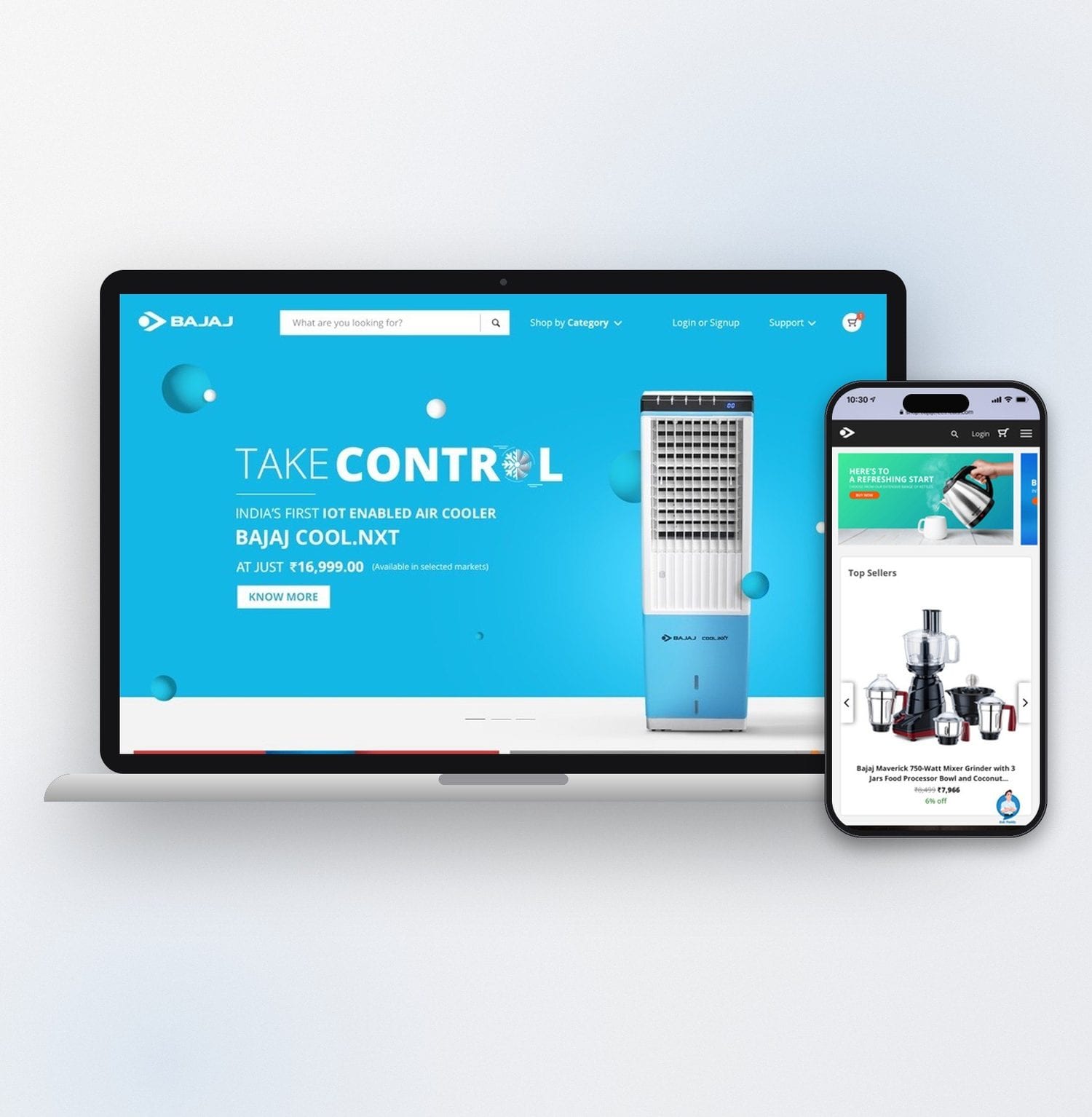
Bajaj Electricals wanted to sell direct to customers, and a storefront alone would not do it. Over a five-year programme, ibs Fulcro built its e-commerce website, linked it to the systems that hold stock and orders, and built two loyalty apps, one for electricians and one for dealers.
- Client
- Bajaj Electricals (consumer appliances, manufacturing)
- Services
- E-commerce website development, customer experience, marketing technology and loyalty applications
- Core platform
- Adobe Experience Manager (AEM) and IBM WCS
- Integrations
- Oracle EBS, OMS, Delhivery, payment gateways, gift cards, Salesforce
- First store
- Custom e-commerce store built in 2004
- Rebuilt on AEM
- June 2018
- Period
- Five-year programme beginning in June 2018
The brief: support direct sales and the dealer network
Bajaj Electricals had a strong appliance range and an established dealer network. To sell direct, it needed a store linked to the systems that already held its products, stock, orders and deliveries.
We first built a custom e-commerce store for Bajaj Electricals in 2004, one of the earliest e-commerce websites in India and three years before Flipkart was founded. In June 2018 we rebuilt it on Adobe Experience Manager with IBM WCS, and added tools for the dealer and electrician network.
The store had to show stock it could deliver. Availability, order status and delivery updates had to pass between systems, and dealers and electricians each needed an app built for their own work.
What we built across the programme
The programme ran as four workstreams: the e-commerce website, the marketing technology stack, the electrician loyalty app and the dealer ordering and loyalty app.
- E-commerce website. Adobe Experience Manager managed the experience and content, with IBM WCS providing commerce. Live APIs linked the store to Oracle EBS, and an order management system handled stock and orders.
- Marketing technology. Adobe Target showed each visitor offers for them, and Adobe Analytics measured the site. Salesforce held B2B leads, and a custom data platform kept customer data in one place.
- Electrician loyalty app. Electricians scan QR codes to earn rewards, and the scheme data goes back to the CRM.
- Dealer ordering and loyalty app. Dealers order and see centrally managed content in one app. Only changed data syncs in the background, so the app works on a weak connection.
How the commerce architecture worked
AEM managed the experience and content, with IBM WCS handling commerce and an order management system supporting inventory and order workflows. REST services and live APIs connected the solution to Oracle EBS and logistics services. We deployed it across 18 servers on Microsoft Azure IaaS, with Cloudflare caching, CDN delivery, global load balancers and Argo Smart Routing.
Explore our enterprise technology stack for more on the platforms we work with and their roles.
| Layer | Technology | Role in the project |
|---|---|---|
| Experience | Adobe Experience Manager | Website content, digital assets and customer-facing experiences, with support for B2B and B2C touchpoints. |
| Commerce | IBM WCS | Product catalogue, pricing, promotions, checkout and order capture, with order tracking, tax and user management. |
| Order management | OMS | Stock and orders, with invoices, returns, status updates and changes made by the service team. |
| ERP | Oracle EBS | Product, inventory and order data exchanged through live APIs. |
| Logistics | Delhivery | Delivery details and order tracking. |
| Personalisation and analytics | Adobe Target, Adobe Analytics, DTM | Personal offers, site analytics and tag management. |
| Payments | Payment gateways, gift cards | Checkout, including gift card redemption. |
| Hosting | Microsoft Azure IaaS | 18 servers deployed by ibs Fulcro for the experience and commerce layers. |
| Delivery and routing | Cloudflare cache and CDN, global load balancers, Argo Smart Routing | Caching, delivery and routing for the deployed experience and commerce architecture. |
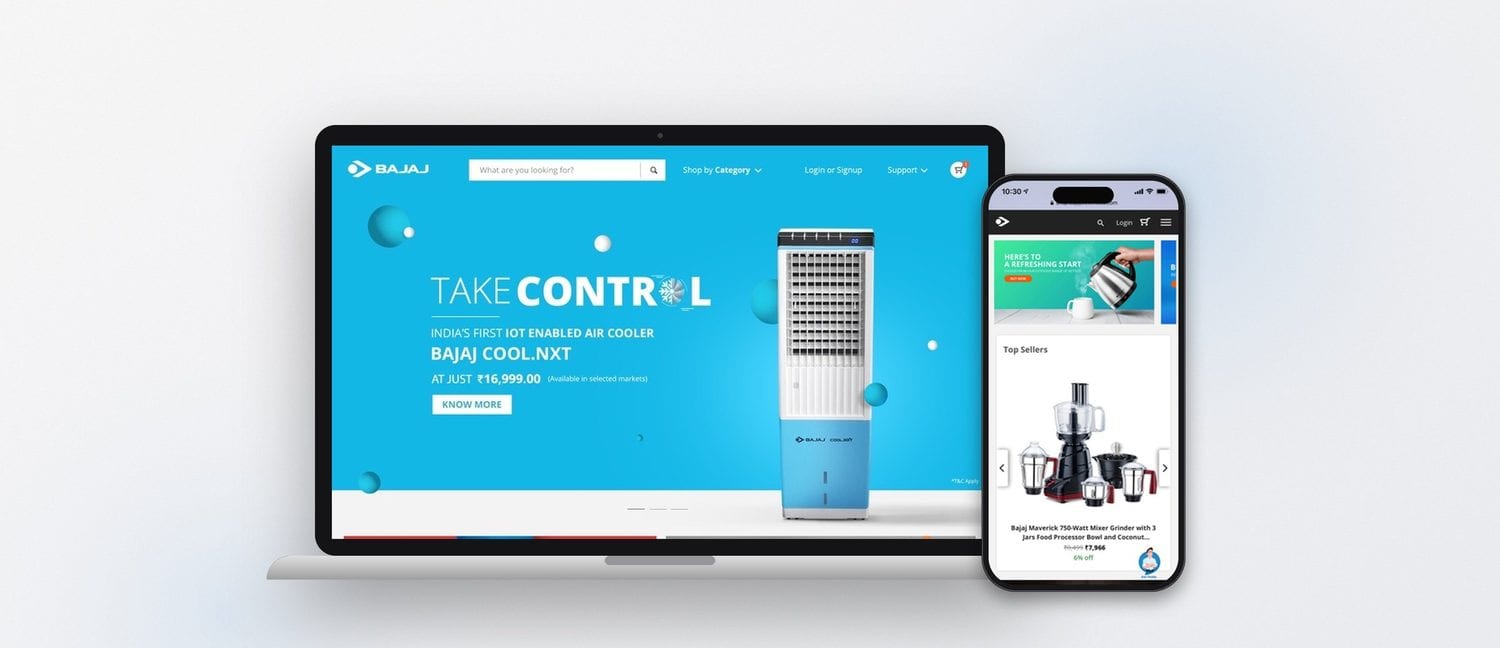
Keeping content and commerce apart let each team work on its own layer. Marketing changes pages in AEM, and checkout and orders stay in the commerce layer. A change that touches both still needs planning across the integrations.
What the programme delivered
For the scope of a comparable project, see enterprise website development and our website development services in India.
Bajaj Electricals moved from a catalogue website to a direct-to-consumer store with its own order pipeline, taking stock and prices from the systems that already held them. Alongside it ran the marketing technology stack and the two apps for dealers and electricians.
What this means for a similar commerce project
Decide which system owns each record before you build the store: products, stock, prices and orders. Then agree how updates move between systems and who handles an order that goes wrong. Those decisions shape what the customer sees and the work after an order is placed.
Questions about the Bajaj Electricals project
Which platforms were used for the Bajaj Electricals store?
The project used Adobe Experience Manager for content and experience, with IBM WCS providing headless commerce. Oracle EBS linked in through live APIs, and an order management system handled stock and orders.
How long did the programme take?
Five years from June 2018, across four workstreams: the e-commerce website, the marketing technology stack, the electrician loyalty app and the dealer ordering app. We had built Bajaj Electricals a custom store before that, in 2004.
Did ibs Fulcro build the loyalty apps as well as the website?
Yes. Electricians earn rewards by scanning QR codes, with the data going back to the CRM. Dealers order through their app, which syncs in the background so it works on a weak connection.
What other Adobe Experience Manager projects has ibs Fulcro delivered?
We have also built on Adobe Experience Manager for Canara HSBC Life Insurance and Morphy Richards India.
How is this project relevant to an enterprise e-commerce brief?
It shows the work involved when an online store connects content, commerce, the ERP, order management and logistics. The dealer and electrician apps show how a brand can sell direct without leaving out its sales network.
Related projects and services
Planning an integrated e-commerce website?
Email [email protected] with your current store, the systems it needs to connect to and what you want to improve. We’ll discuss the scope and the next step.