
Home › Case studies › Website development
Manufacturing website case study · Polycab
Polycab: product discovery and corporate information on one website
Polycab’s website has two audiences: buyers looking for a product and investors looking for the company. After 619 stakeholder interviews, ibs Fulcro designed and built one site for both, with a searchable catalogue, product comparison and a corporate hub.
- Client
- Polycab (wires, cables, fans, lighting, solar)
- Services
- Website design and development, UI and UX, product discovery
- Platform
- Umbraco CMS with a .NET MVC front end
- Scope
- Product catalogue, corporate hub, personalisation and accessibility-focused design
- Preceded by
- 619 stakeholder interviews and benchmarking of more than 50 electrical brands
- Audiences
- Product buyers, retailers, electricians, architects, investors and prospective employees
The brief: make room for product buyers and investors
The site carries 2,725 products across wires, fans, lighting and solar, along with investor reports, sustainability reports and careers. Some visitors arrive with a part number in mind. Others want to browse a range or learn about the company.
Each group needed a clear route. Product buyers needed search, filters and comparison. Corporate visitors needed their own place in the navigation.
Research shaped the priorities
We ran 619 structured interviews with board members, product teams, retailers, electricians, architects and end customers, and benchmarked more than 50 electrical brands. That research set the priorities for the redesign. It has its own case study, Polycab web experience research.
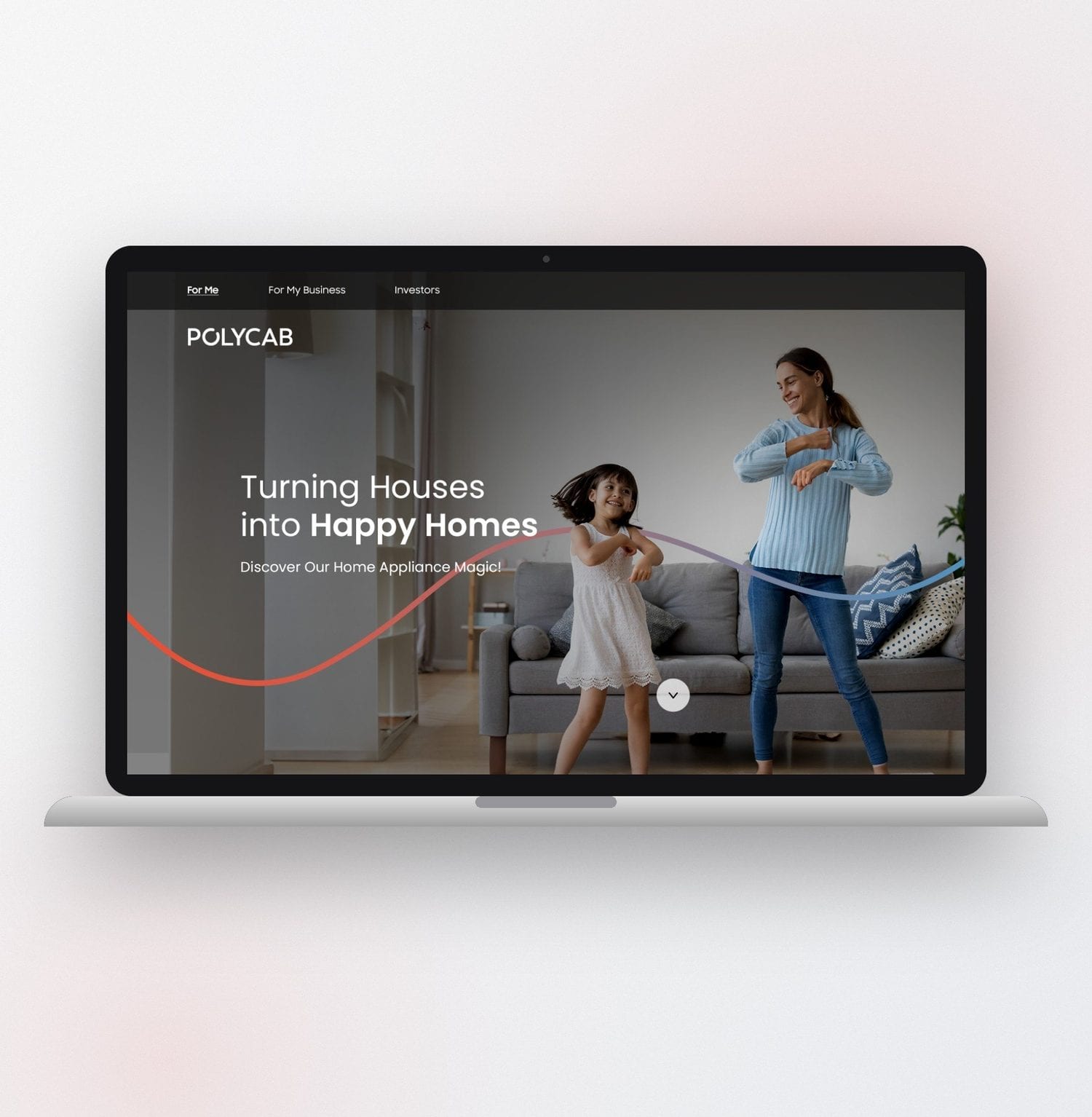
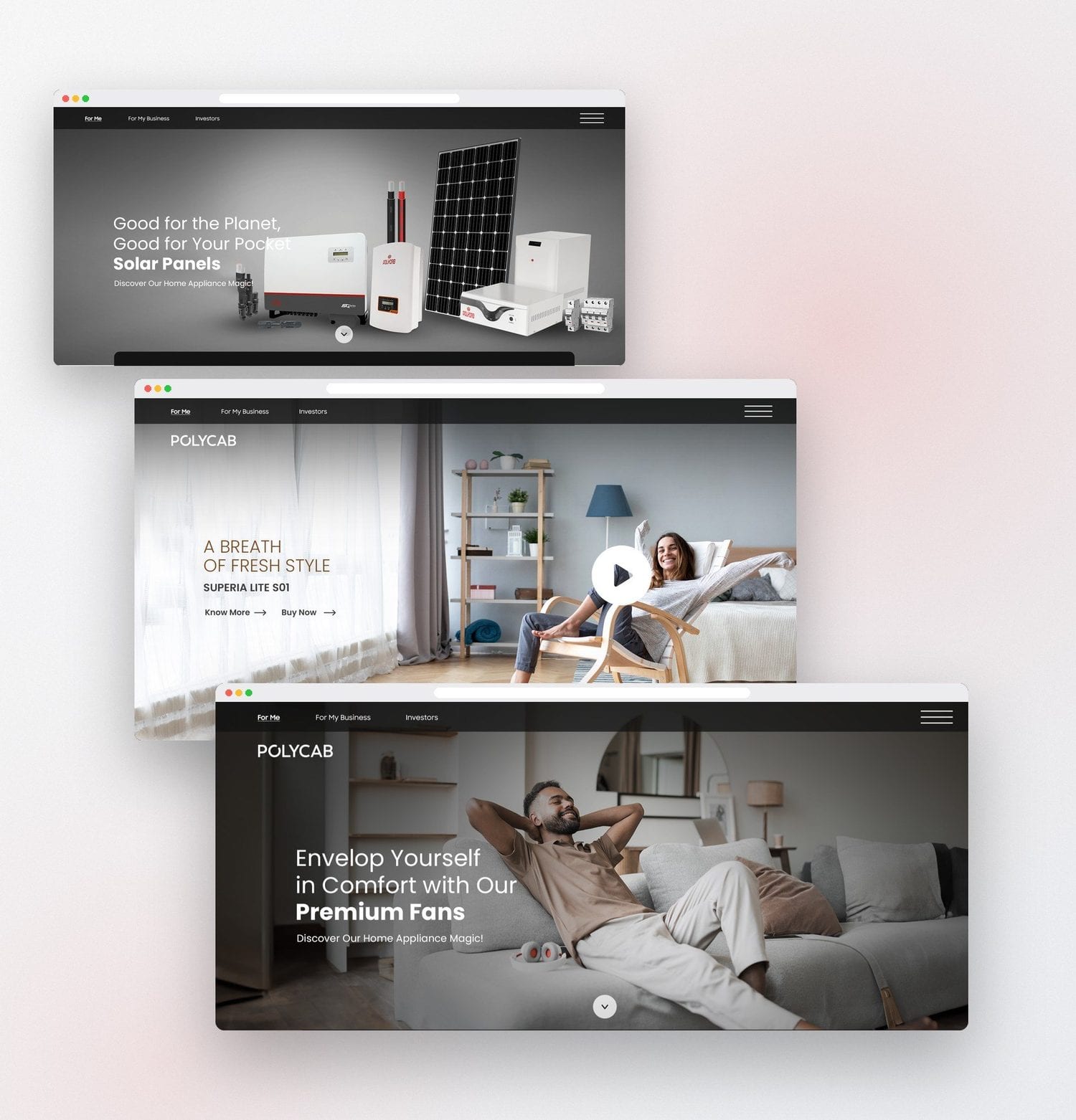
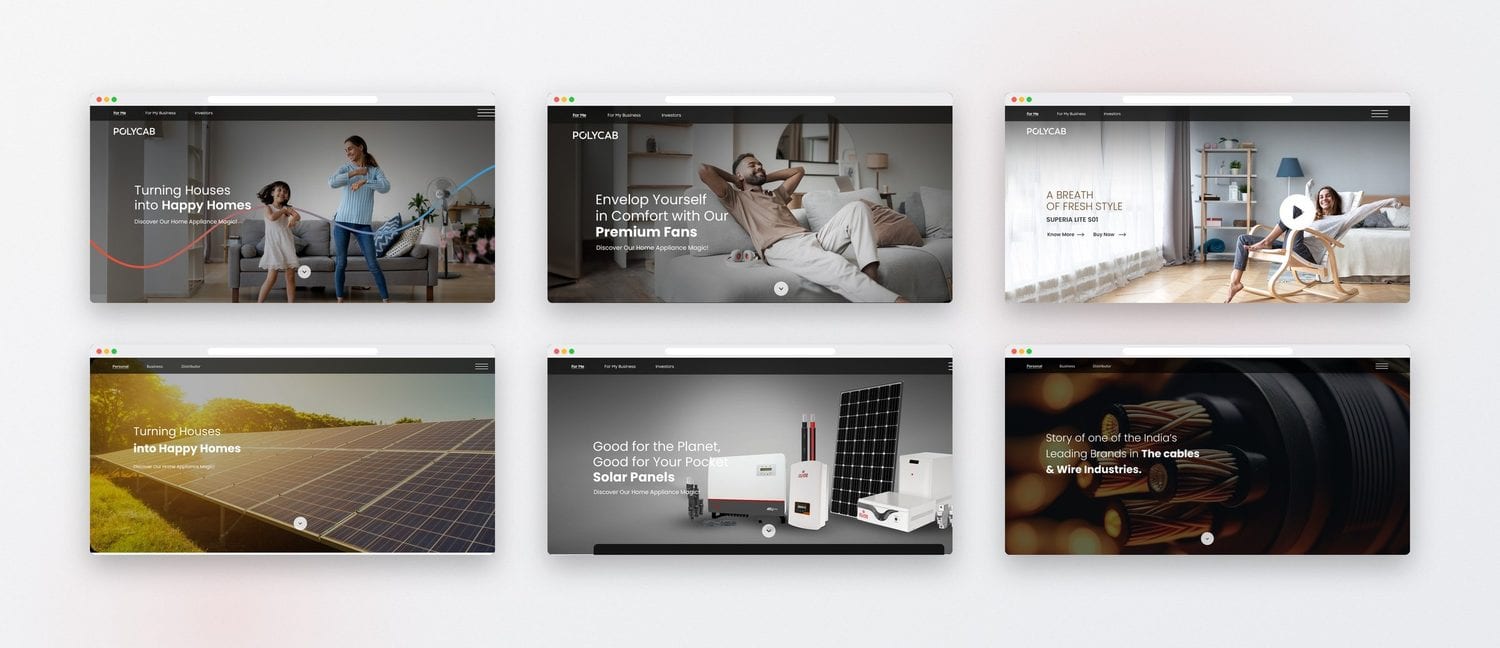
For a catalogue site like this one, see our manufacturing and B2B website development service.
The build gave buyers and the content team what each needed:
- Product discovery. Search, filters and comparison across wires, fans, lighting and solar.
- Corporate information. Own sections for the company, investors, sustainability and careers.
- Design across devices. Built for phones first, with accessibility in the scope.
- Analytics and personalisation. Tracking shows how visitors use the site and drives product recommendations.
- Regional-language readiness. Built ready for Hindi and other regional languages.
- Content management. Editors manage company and product content, and publish products in bulk.
What the website enabled
Our website development process shows how research, design, build and later changes fit together.
Buyers search, filter and compare products in the catalogue. Investors reach company information, reports and careers by their own route. The publishing team updates products in bulk, in the same platform as the corporate content.
Planning a website for several audiences
Start with what each audience comes to do. A specifier checks product attributes, and an investor wants a report. Research tells you which comes first, and navigation, page structure and search turn that into routes through the site.
Questions about the Polycab website
What did ibs Fulcro build for Polycab?
We designed and built a searchable product catalogue across wires, fans, lighting and solar, with filters and comparison. Company pages, investor reports and careers sit on the same platform. The build also covered analytics, product suggestions and the Umbraco CMS, with a .NET MVC front end.
What research informed the redesign?
The research covered 619 interviews with Polycab teams and customers, and a review of more than 50 electrical brands. The separate research case study explains that work.
Was accessibility part of the project?
Yes. The site works on desktop and mobile, and accessibility was part of the scope.
Was the platform prepared for Indian languages?
Yes. The platform was built ready for Hindi and other regional languages.
Related projects and services
Planning a product catalogue or corporate website?
Email [email protected] with your current website, product range and main audiences. Tell us where product information is stored and what visitors need to find. We’ll discuss the scope and the next step.