Manufacturing and B2B websites
B2B and manufacturing website design and development in India
By Rakesh Purohit, Chief Technology Officer, ibs Fulcro · Reviewed 21 November 2026
Help buyers find the right product and give your sales team the detail they need to follow up. We build manufacturing and B2B websites with searchable catalogues, clear product information and enquiry forms designed around your sales process.
In short- Our website work includes Tata Tele Business Services, Polycab, Transworld, Bajaj Electricals and Morphy Richards India. These projects span business services, product catalogues, regional corporate websites and commerce.
- For Tata Tele Business Services, the website rebuild was followed by an 85% increase in form submissions. The project combined a headless CMS with pre-rendered pages delivered through a content delivery network.
- Distributors, specifiers and investors need different information. We use stakeholder research to decide how each audience reaches the products, services or reports they came for.
- Specifications, certifications and product variants become searchable catalogue data. If that information is held in PDF datasheets, we start by structuring it for use on the website.
- Planning a manufacturing or B2B website? Corporate sites with a product catalogue fall within our ₹60 lakh–₹2 crore enterprise range. Distributor portals are scoped separately. Share your brief at [email protected].
What does a manufacturing or B2B website need to get right?
Buyers need enough detail to decide whether a product fits their application. Your sales team needs enough context to respond. We connect the catalogue, enquiry form and lead routing so the website supports both.
Make technical information easy to revisit. B2B buyers return as they compare products, check specifications and seek approval. Product pages should help them find the next answer without starting their research again.
Give each audience a clear route. A distributor needs stock and ordering information; a specifier needs dimensions, certifications and datasheets; an investor needs company reports. Stakeholder research helps us set navigation priorities, which we review against usage after launch.
Our manufacturing and B2B website work
Website buildTata Tele Business Services
Website rebuild with a headless CMS and CDN delivery
134%Increase in user sessions
We rebuilt the Tata Tele Business Services website on a JAMstack architecture, using a headless CMS and pre-rendered pages delivered through an edge content delivery network. The content team could manage updates in the CMS without editing website code.
- 85% increase in form submissions
- Active users doubled
- 62% reduction in bounce rate
Read the case study › 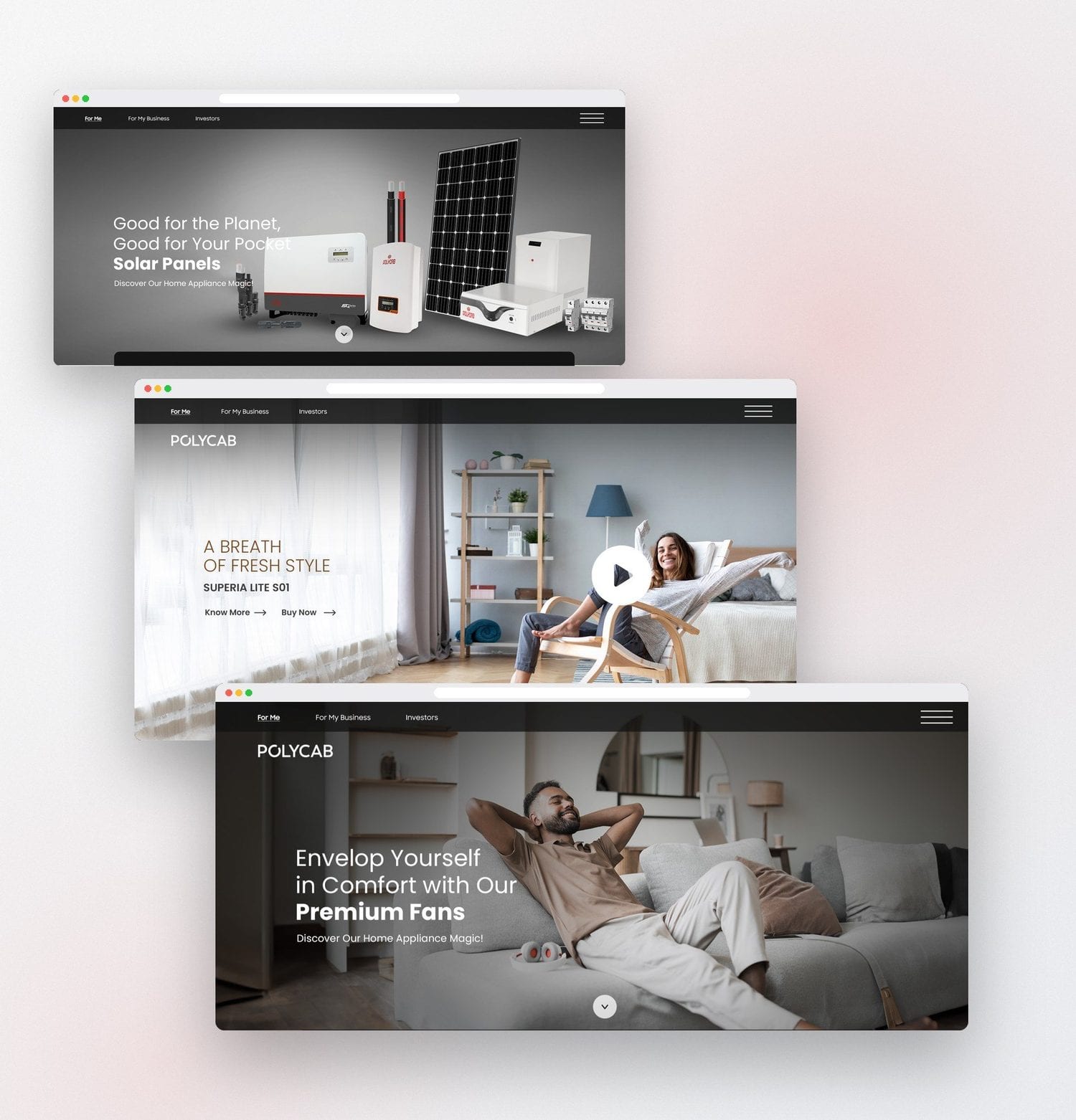
Website buildPolycab
Product catalogue and corporate website
4Product categories on one catalogue
We built a website for Polycab’s product buyers and investors, with search, filters and product comparison across wires, fans, lighting and solar. The site was prepared for Hindi and other regional languages.
Read the case study › 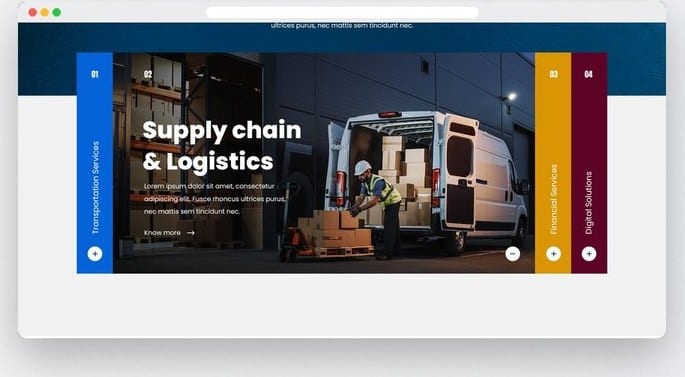
Website buildTransworld
Regional corporate website on Umbraco and .NET Core
1 domainServing every region and business line
We brought Transworld’s regional businesses together on one domain, with services and business lines presented according to the visitor’s region. The content authoring environment was kept separate from the public website.
Read the case study › 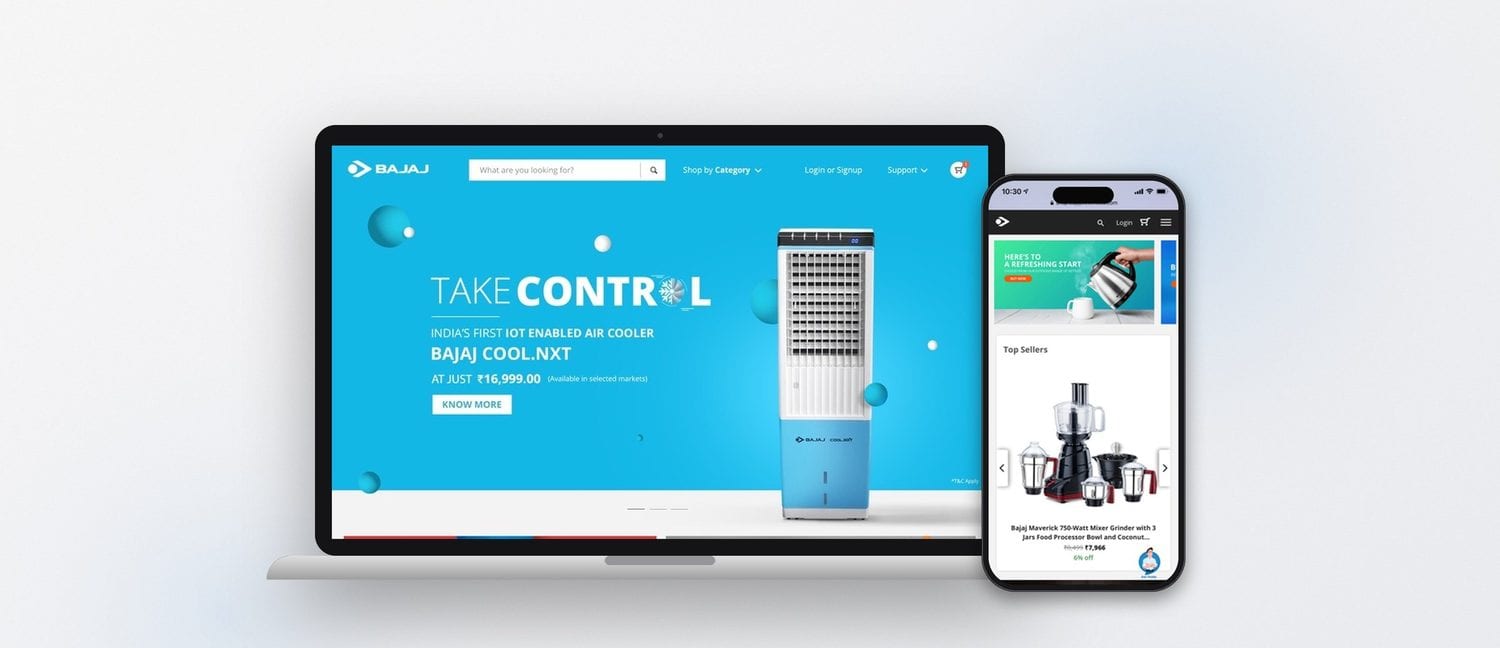
Website buildBajaj Electricals
Commerce on Adobe Experience Manager and IBM WCS
2004First store, among India's earliest e-commerce websites
We built a direct-to-consumer store for Bajaj Electricals on Adobe Experience Manager with IBM WCS headless commerce, connected to Oracle EBS through live APIs. The wider engagement also included dealer ordering and a QR-scan rewards app for electricians.
Read the case study › 
Website buildMorphy Richards India
Design-led e-commerce store on Adobe Experience Manager and IBM WCS
We redesigned and rebuilt the Morphy Richards India e-commerce site on Adobe Experience Manager with IBM WCS headless commerce, the same stack as Bajaj Electricals. Products are shown in staged sets, and editorial Range pages replace the catalogue grid.
Read the case study › Our work with these clients also includes stakeholder research and sales applications.
Stakeholder research and sales applications
Polycab: Before the website build, we conducted 619 stakeholder interviews with board members, product teams, retailers, electricians, architects and end customers. The findings helped establish what the home page and navigation needed to prioritise.
Tata Tele Business Services: We built a custom Outlook application for the sales team. The application cut email composition time by 90% and lifted lead conversion by 20%.
Product catalogues, distributor portals and lead routing
A buyer needs to find a suitable product. A distributor needs access to the right commercial information. Sales needs the enquiry to reach the right person. We plan the data and workflows behind each of those tasks.
- Searchable product catalogues. We structure the attributes buyers use to select a product. For a wire, that might include gauge, core count, voltage rating, certification and drum length. Relevant attributes become filters; supporting datasheets stay available on the product page.
- Current datasheets and certifications. We organise product documents in the CMS with a named owner and relevant review or expiry dates, so your team can keep the published information up to date.
- Distributor and dealer portals. We build authenticated access for agreed stock, pricing and ordering functions, with permissions, search and session handling planned as part of the project.
- Editable lead routing. We assign enquiries by territory, product line, order size or other agreed rules. Your team can update those rules as sales responsibilities change, without a code release.
- Enquiry forms that help sales follow up. We choose qualifying questions with your sales team, such as the application, quantity and purchase timeline. We then review completion and lead quality to see whether the form is asking for the right amount of detail.
How we build a manufacturing or B2B website
We start with the catalogue and the journeys that lead to an enquiry. Stakeholder research helps us understand what each audience needs. The agreed scope then takes the project through design, development, launch and ongoing improvements.
- Behavioural audit. We analyse the existing site using Hotjar or Microsoft Clarity to record heatmaps, scroll maps, visitor recordings and form analytics. This helps us identify UX bottlenecks such as where people stop, what they never reach, and which fields cause form drop-offs.
- UI and UX. We build a concept prototype first to put the shape of the journey in front of people quickly, then wireframe to fix the structure and the template set. We run user testing on the wireframes, while changing them is still cheap.
- Design in Figma. We design in Figma against the agreed template set, covering the states that get skipped: empty, loading, error, and the form after a failed submit. We then build a high-fidelity prototype, so what goes to development has already been clicked through.
- Development. We build the frontend and the CMS together on a named stack, in a repository you own from the first commit. We implement Core Web Vitals, structured data and AI search visibility at this step.
- QA and VAPT. We run functional and cross-device QA, then VAPT (Vulnerability Assessment and Penetration Testing) on the build. We check consent handling, data storage and retention against the DPDP Act (Digital Personal Data Protection Act) and, where you have European users, GDPR.
- Deployment. We hand over the repository, the documentation and the deployment pipeline. You can take all three to another vendor.
- Analytics, A/B testing and CRO. We deploy measurement with the site, then run A/B tests against the behaviour the audit found and work through CRO (Conversion Rate Optimisation) on the journeys that carry the revenue. We report against the same metrics the audit used, so the before and after are comparable.
- Ongoing enhancements and content authoring. We run enhancements on a monthly cycle and author content where your team wants the pages written as well as published. The maintenance retainer covers both.
How much does a manufacturing or B2B website cost?
A new website build starts at ₹10 lakh. Enterprise websites with a product catalogue range from ₹60 lakh to ₹2 crore, depending on technology, integrations and scope. The full enterprise workflow includes research and audit work, UX and UI design, user testing, CMS development, agreed integrations and post-launch conversion optimisation.
A distributor or channel portal adds to the corporate website scope. Its cost depends on access permissions, customer-specific pricing, ordering workflows and the systems it connects to. We agree these requirements before quoting.
Manufacturing and B2B website development: common questions
Which manufacturing and B2B brands have you worked with?
Our website work includes Tata Tele Business Services, Polycab, Transworld, Bajaj Electricals and Morphy Richards India. We also conducted stakeholder research for Polycab and developed a custom Outlook application for the Tata Tele Business Services sales team.
Can you build a distributor or dealer portal?
Yes. We build authenticated portals with agreed permissions and access to functions such as stock information, pricing and ordering. The scope depends on your channel rules and integrations. Our Bajaj Electricals engagement included dealer ordering alongside the consumer store.
Can you turn our product data and PDFs into a searchable catalogue?
Yes. We structure product information into fields such as specifications, certifications and variants, then use the relevant fields for catalogue search and filters. If the information is held in PDFs, extracting it into a product data model is part of the initial work. Datasheets stay available alongside the product details.
How do you improve the quality of website enquiries?
We agree what sales needs to know, add suitable questions to the enquiry form and route requests to the right team. Depending on the product, useful details include the application, quantity and purchase timeline. We review the effect on both form completion and enquiry quality.
Do you carry out stakeholder research before the build?
Yes, where it is part of the agreed scope. Research helps us understand what buyers, distributors and internal teams need from the website. For Polycab, 619 stakeholder interviews informed the priorities for the home page and navigation.
What budget should we allow for a manufacturing or B2B website?
For an enterprise corporate website with a product catalogue, allow ₹60 lakh–₹2 crore, depending on technology, integrations and scope. Distributor portals add to that scope. A new website build starts at ₹10 lakh, and monthly support and content authoring starts at ₹75,000.
How long does a website build take?
A new website build takes 2 to 3 months. An enterprise website with the full workflow takes 6 to 9 months, with a partial release at 3 months. These timelines assume a named single point of contact on your side who gives feedback and approvals promptly, with every response within 2 business days.
What should you include in your website brief?
- Your current website, if you have one, and whether you need an audit, a redesign or a new build.
- The people who need to use the site: buyers, specifiers, distributors, investors or other audiences.
- Your product range, catalogue size and where specifications and datasheets are stored.
- The actions you want visitors to take, such as requesting a quote, contacting a dealer or placing an order.
- Any distributor access, customer-specific pricing or ordering requirements.
- The systems the website must connect to, along with any language or regional requirements.
- Your target launch date and, if agreed, a budget range.
Our B2B and manufacturing work
Process and pricing
Let’s discuss your manufacturing or B2B website
Email [email protected] with your website address and what you want to improve. If you have a brief, send it along. We’ll discuss the requirements and the next step, whether that’s an audit, a catalogue redesign or a new website.